RESEARCH THROUGH ART PROJECTS

Backdrop (Venice), 2017 
Gobos, 2019 
The Skene Expedition, 2016 
The Winter’s Tale, 2016 
WeSANK Considerings – Research Pavilion (Venice Biennale 57th), with Emmanuelle Chiappone-Piriou 
Reacclimatizations (Inception), 2018 
9H057 7rI0 (70 3dW4rd 9. cR4I9), 2019 
The Theatre Season, 2016 
The Cancellation, 2016 
Kesäteatteri (Summer Theatre), 2016
REACCLIMATING THE STAGE (SKENOMORPHOSES)
Artistic Research Doctoral project 2015-2020
Tutke/Performing Arts Research Centre, Theatre Academy, UNIARTS Helsinki
Reacclimating the Stage (Skenomorphoses)
Reacclimating the Stage (Skenomorphoses) is a doctoral artistic research project investigating the transformation of the practice and notion of the stage amidst the ecological, technological, and anthropogenic shifts of the twenty-first century. Grounded in my practice as a theatre director and scenographer, the project approaches the stage not as an anthropocentric site of representation but as a milieu in continuous reconfiguration, whose conditions of existence evolve through changing ecologies, temporalities, and material relations.
The research proposes a shift from stage-as-centre to stage-as-milieu, exploring how the stage may become a space of coexistence where humans, other-than-humans, technologies, infrastructures, landscapes, and material memories actively participate in the production of situated scenographies. Instead of asking how theatre might represent contemporary ecological crises, the project investigates how its fundamental operations – gathering, arranging, transmitting, and making appear – can be reacclimated beyond the representational paradigm.
The artistic works developed throughout the – and as – research function as scenographic experiments. They explore how the operations and rituals of Western theatre can be redirected towards assemblages in which objects, materials, architectures, archives, and environments become material relays of memory in transformation. This process unfolds through a double ecology: an ecology of site/situation attentive to the relational conditions through which scenic environments emerge, and a material ecology of memory, in which scenic matter does not preserve the past but extends its potential for ongoing metamorphosis (skenomorphosis).
Within this framework, redirecting is proposed as an alternative to the modern paradigm of directing. Whereas directing presupposes a position of authorship and control over representation, redirecting operates in medias res, composing with the agencies of materials, technologies, living beings, infrastructures, and temporalities already at work within a given site/situation.
Through re-ecologising and re-temporalising theatre, Reacclimating the Stage (Skenomorphoses) develops a scenographic practice grounded in discipline fluidity, simultaneous environments, and ecodramaturgical hospitality. The research establishes the conceptual foundation for my subsequent projects, including Data Ocean Theatre (D.O.T.) and Floral Dramaturgies, which continue to investigate the material, ecological, and scenographic conditions through which a non-anthropocentric, resituated sense of theatricality emerge and perform.
Supervision / Direction de la recherche: Esa Kirkkopelto, philosopher, performing artist, researcher and Professor of Artistic Research at the Performing Arts Research Centre, Uniarts Helsinki (supervision period: 2015 – 2019) & Mika Elo, visual artist, researcher and Professor of Artistic Research at the Fine Arts Academy, Uniarts Helsinki (2016 – 2020)
Supported by / Soutien à la recherche: CIMO Fellowships Programme (2015-2016), KONE Foundation (2016 – 2020)

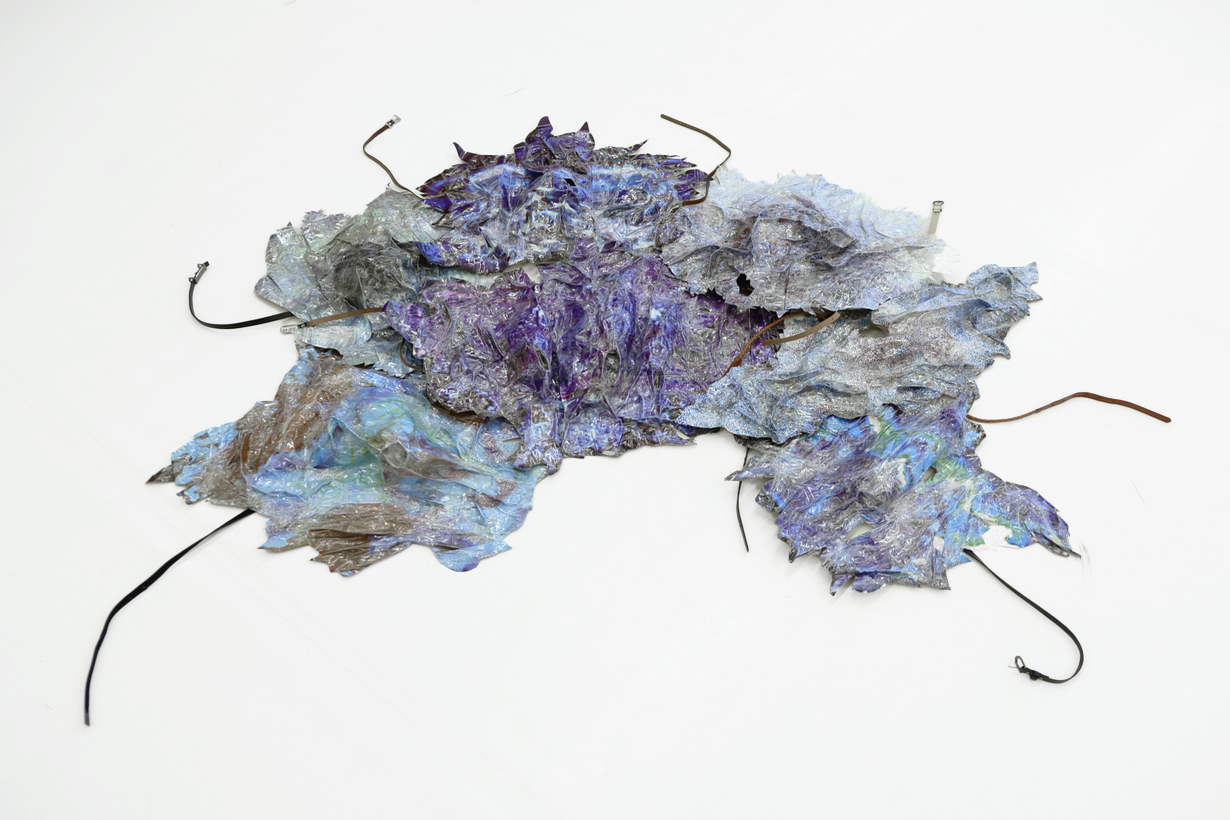
Data Ocean Theatre/Tragedy & the Goddexxes/II.PARODOS, 2022 
Data Ocean Theatre/Tragedy & the Goddexxes/V.KOMMOS, 2022 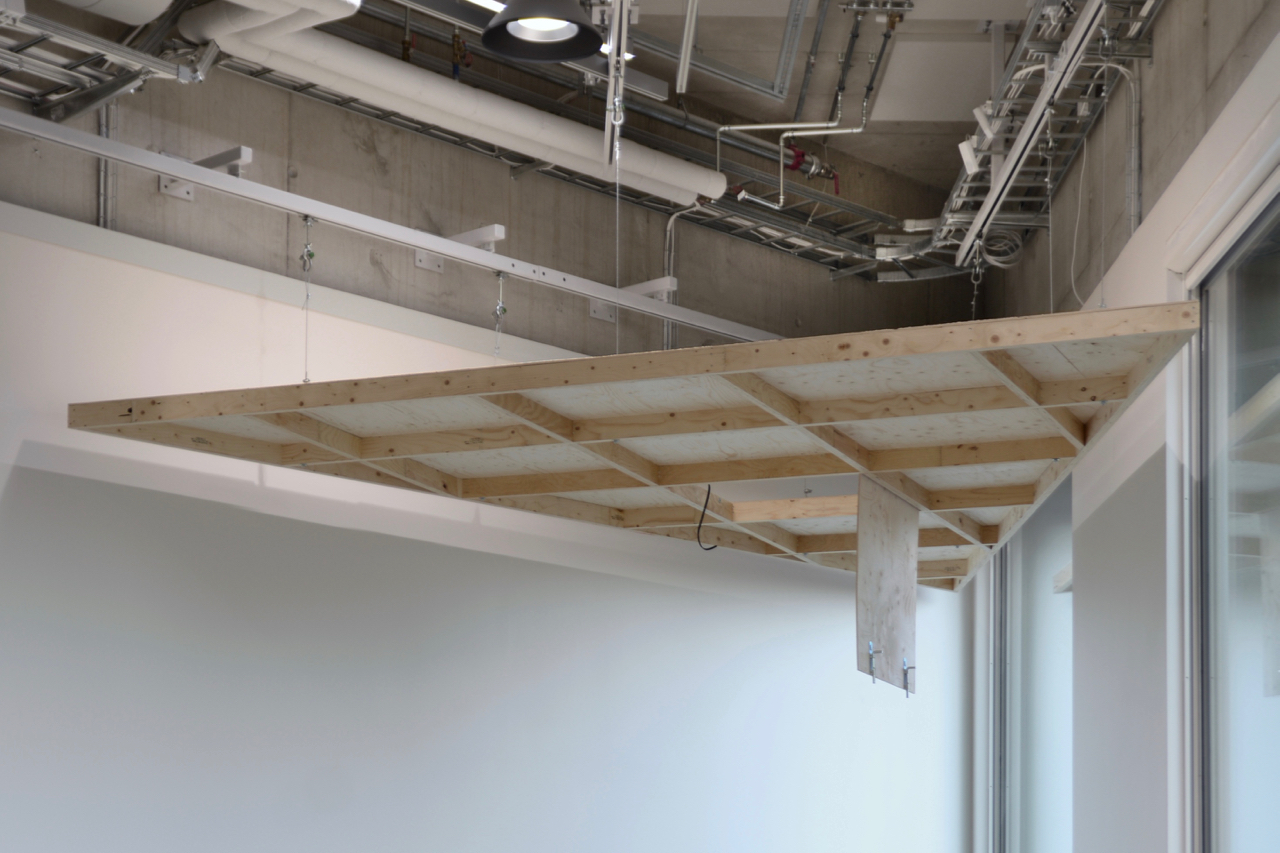
Data Ocean Theatre/Tragedy & the Goddexxes/II.PARODOS, 2022 
Data Ocean Theatre/Tragedy & the Goddexxes/I-VI, 2023 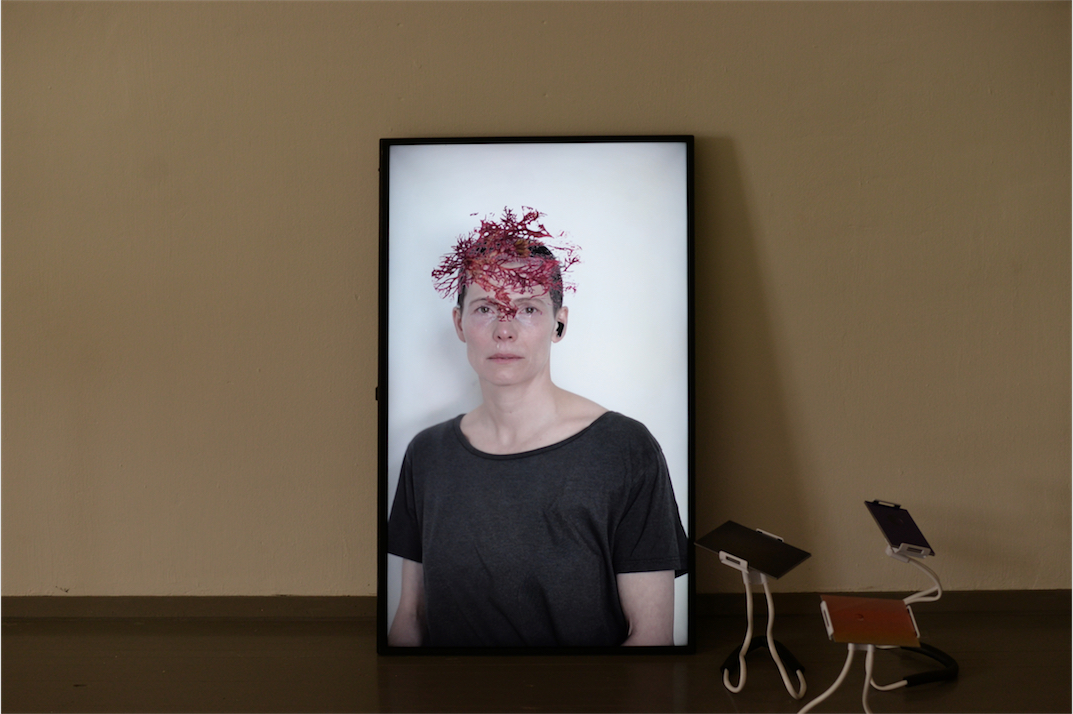
Data Ocean Theatre/Tragedy & the Goddexxes/VI. EXODOS, 2023 
Data Ocean Theatre/Simultaneous Environments (Festival), 2020 
Data Ocean Theatre/Tragedy & the Goddexxes/I. PROLOGOS, 2021 
Data Ocean Theatre/Tragedy & the Goddexxes/I. PROLOGOS, 2021 
Data Ocean Theatre/Tragedy & the Goddexxes/VI. EXODOS, 2021 
Data Ocean Theatre/Tragedy & the Goddexxes/VI. EXODOS, 2021
DATA OCEAN THEATRE
Postdoctoral artistic research project (2020-2024)
Data Ocean Theatre (D.O.T.) is a four-year artistic research project that explores the intersection of myths, western theatre memory, new media, digital animism, climate emergency, sea and ocean transformations, queer subcultures, and technological mutations in relation to aspects of “submersion” as a contemporary living condition. Expanding on the claimed unsustainability of western theatre’s anthropocentric foundations, D.O.T. examines how the notion and practice of the stage transform amidst climate urgency, technological hypergrowth, and discipline-fluid hybridization. It seeks to generate experiments on a new temporal ecology of the stage, examining how theatre-making infrastructures might transition within a multi-agential dynamic of emergence. D.O.T. appears, disappears, and reappears through a series of polymorphic artworks and research affordances based on the eco-dramaturgical consideration of the simultaneous phenomenon of 1. the rising sea and ocean levels, 2. the exponential growth of big data in our informational age, and 3. the emotional overload caused by the latter two happening, projection, and prophecy. D.O.T. explores inherited sea-and-ocean-oriented myths and revisits theatre plays with a marine backdrop, looking simultaneously into contemporary nautical vocabulary and sea imagery used as metaphors for computational realities. D.O.T. proposes to re-mythologize western theatre foundations by forming an alternative pantheon for a queer, hydrofeminist, and technoanimist reset of the “tragic,” at the interplay between a syncretic marine mythology and the ambiguities of “technology-as-monster” narratives. In D.O.T. project, the forces and fragilities of transforming marine ecosystems intersect with algorithmic-conditioned life and crossbreeding of diverse art disciplines and research fields based on collaborations, generating imaginary prototypes for future societal constructions in the floods. D.O.T. is structured around several key components: the prologue entitled “Simultaneous Environments” consisting of a series of experiments and works exhibited and/or shared autonomously, the central project entitled “Tragedy and the Goddexxes” consisting of a series of works initially exhibited autonomously, then grouped together for three public exhibitions (at Titanik Gallery Turku/Fifth Research Pavilion Helsinki/Kiasma Theatre Helsinki), a three-month research residency (HIAP Helsinki), a series of workshops in art schools (Tromsø, Helsinki, Tallinn), and a publication in the form of a final exhibition on the Research Catalogue.
REFERENCE PLAYS: Philoctetes, SOPHOCLES, 409 BC / Iphigenia in Aulis, EURIPIDES, 405 BC / The Tempest, William SHAKESPEARE, 1610 / Phèdre (Phaedra), Jean RACINE, 1677 / L’île des esclaves (Slave Island), Pierre de MARIVAUX a.k.a. MARIVAUX, 1725 / Fruen fra havet (The Lady from the Sea), Henrik IBSEN, 1888/ Le soulier de satin (The Satin Sleeper), Paul CLAUDEL, 1929 / Embers, Samuel BECKETT, 1957 / The Sea, Edward BOND, 1973 / L’Eden Cinéma, Marguerite DURAS, 1977 / Une Tempête (A Tempest), Aimé Césaire, 1979 / A Summer Day, Jon Fosse, 1999
REFERENCE SEA MYTHS/MONSTERS: Amphitrite (Greece) / The Oceanides/Aallottaret (Greece/Finland) / Iku-Turso (Finland) / The Kraken (Scandinavia) / Xixili (Basque Country) / Hanzaki Daimyōjin (Japan)
Research affiliation: Visiting postdoctoral artist researcher in the Performing Arts Research Centre at Theatre Academy at the University of the Arts of Helsinki (1.1.2021-31.12.2024)
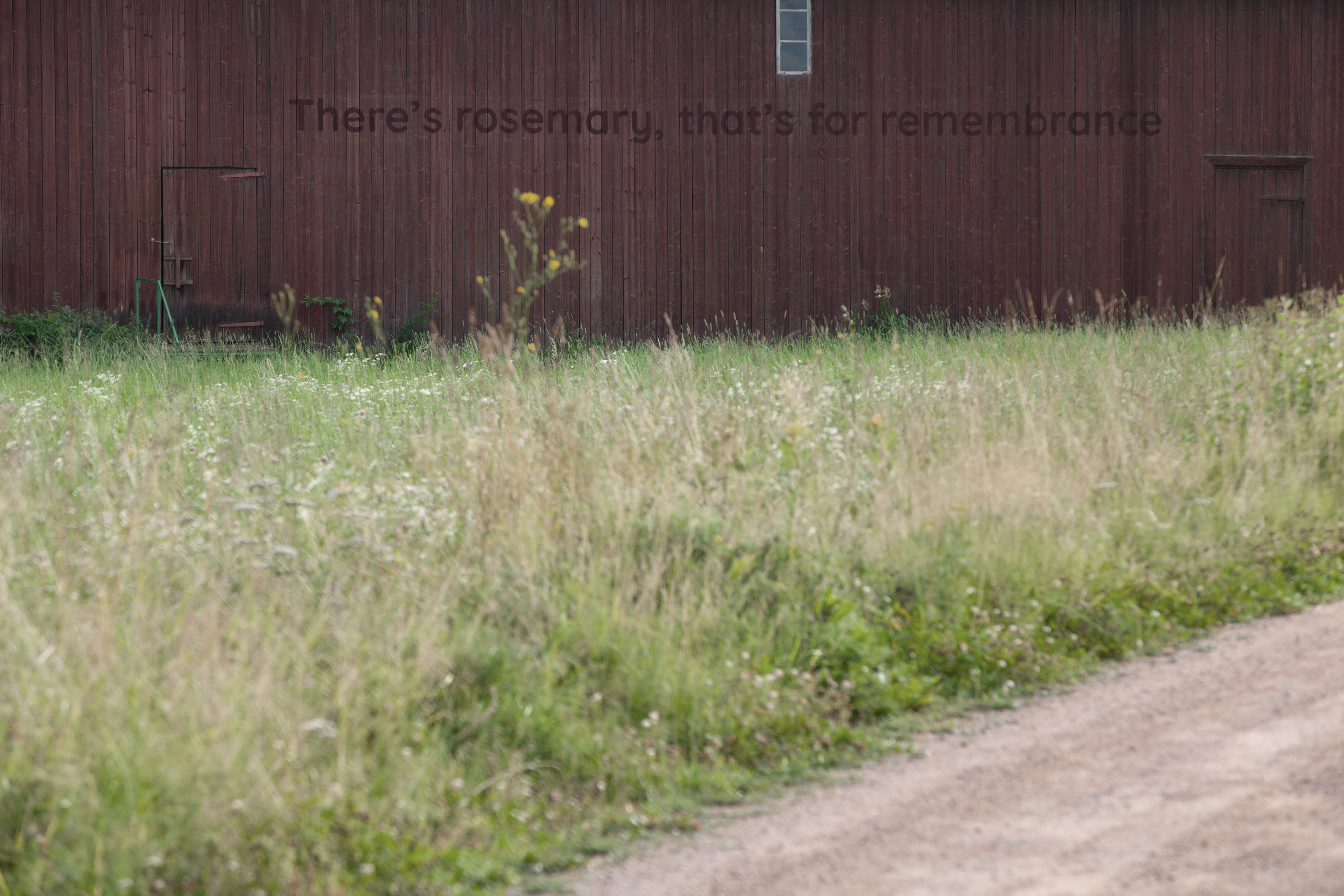
FLORAL DRAMATURGIES (2025–…)
Floral Dramaturgies builds on the doctoral and postdoctoral artistic research projects Reacclimating the Stage and Data Ocean Theatre. It revisits the historical foundations and contemporary resonances of the Flower Power movement at a moment marked by renewed armed conflicts in Europe and an urgent need to reimagine forms of collective resistance and care. Engaging with the plural notion of powers and their diverse manifestations today, the project examines theatre’s historical capacity to support social change and expands this research into the growing field of ecodramaturgy. Through a series of multidisciplinary art and research affordances, it traces the movement’s path from its countercultural and pacifist origins to its current expressions across global contexts.
The project investigates how forms of power entangled with flora, including symbolic, aesthetic, collective, political, energetic, technological and affective modalities, are staged, embodied and debated today. A structural component is the integration of Artificial Life as a framework for understanding contemporary techno-ecologies, in which synthetic organisms and computational environments reshape how flowers are perceived as agents of relation and transformation. This focus opens new ground for reflecting on the ethics and politics of life as it is constructed and enacted within technoscientific culture.
Floral Dramaturgies renews the Flower Power imaginary by considering its relevance for contemporary societies and by pursuing a long-term effort to re-ecologise Western theatre. It rethinks scenographic practices and enacts the stage as a site of more-than-human hospitality, peaceful coexistence and the restoration of justice in damaged environments/societies. The work develops through collaborations with flower-focused artists, researchers and activists who contribute to an aesthetic experiment on the many layers through which flowers operate as aesthetic, social, political and ontological signifiers, as well as active participants in shaping collective experience/imaginary.
Grounded in ecological awareness, posthuman ethics and discipline fluidity, Floral Dramaturgies unfolds across four interconnected areas:
- Peacebuilding and community-based actions, with a focus on how flowers can participate in practices of collective healing and nonviolent resistance.
- Posthuman relations and floral healing powers, reactivating Flower Power through ecofeminist and new materialist perspectives developed during more than ten years of Anthropocene-focused research.
- Decolonising botany, challenging extractive and colonial approaches to flowers and foregrounding situated and plural knowledges through collaborations with researchers, artists and communities in regions of the Global South including Southeast Asia and Africa.
- Flowers and technology, critically engaging with emergent techno-floral forms shaped by AI and A-Life, and examining how these systems influence perception and imagination while revealing tensions between technological hope and ecological precarity.
Follow the project-in-progess here.
back to the top of the page: untitled post 1886
