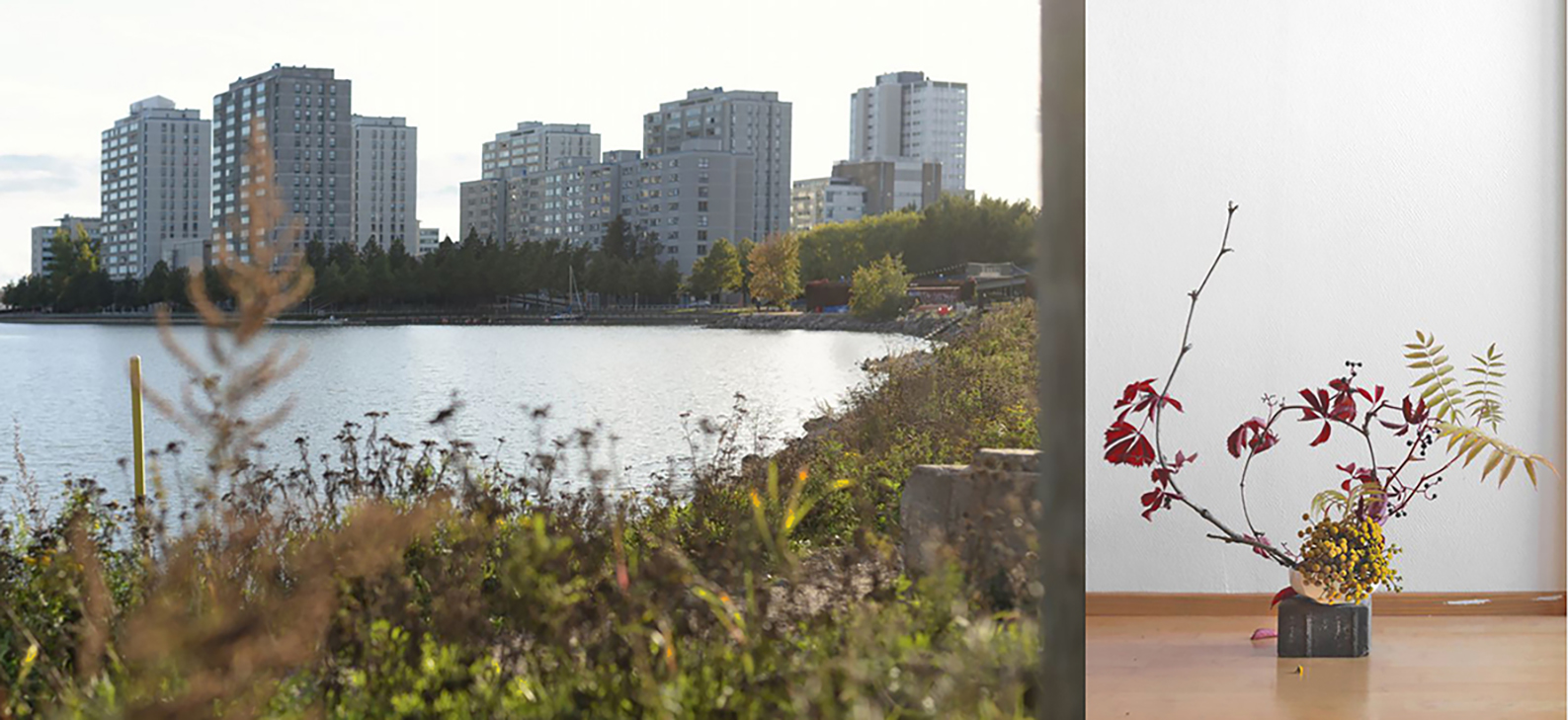
FLEURS/FLOWERS
Having grown up in a family of professional gardeners and florists, I developed an early practical knowledge of flowers, plants, and floral techniques while working in my youth in the family-run company. This embodied familiarity with floral materials has continued to inform my artistic practice, in which flowers have progressively shifted from being motifs or compositional materials towards becoming active dramaturgical and scenographic agents.
I have worked continuously with flowers and vegetal life across projects including Deferred Landscapes (2008–2010), Third-Ikebana (2009–ongoing), Coco and Pablo Have Left the Building (2013), Reacclimatizations (2018–ongoing), Pray you, love, remember (2025), and The 444th Season (2026). These works explore different relationships between floral practices, theatre, situated scenography, ecological thinking, archives, and more-than-human forms of agency.
Since 2025, this long-term engagement has developed into the artistic research project Floral Dramaturgies: Nonviolent Ecologies of Power in Contemporary Performance. The project investigates flowers as an experimental field through which to reconsider how theatre distributes visibility, agency, materiality, and power. Through my practice of redirecting, floral and vegetal elements conventionally relegated to theatrical backgrounds, decoration, symbolism, or atmosphere are displaced towards the centre of the scenic apparatus. Flowers are approached not simply as representations but as living and transforming co-performers: growing, reproducing, wilting, decomposing, circulating, and entangling theatrical time with biological, seasonal, climatic, cultural, and technological temporalities.
This research also extends into pedagogy. I have facilitated workshops and courses on flower-oriented performance and scenographic practices for art students at institutions including Uniarts Helsinki, DAMU Prague, and the Latvian Academy of Culture in Riga, often working in relation to botanical gardens and other living environments. These workshops invite participants to approach botanical sites not as backgrounds or resources for artistic production but as already active performative milieus, and to experiment with ways in which scenographic composition can emerge through encounters with plants, seasonal processes, site-specific conditions, and existing multispecies relations.
Alongside this artistic and pedagogical research, I have maintained an ikebana practice for more than fifteen years, following studies initiated in Tokyo in 2008. Working as an advanced non-professional, I am particularly interested in Seika-Shōka forms and in how their compositional principles can enter into dialogue with contemporary ecological and artistic questions. I currently facilitate seasonal introductory ikebana workshops at Työhuone Helsinki.
fffff

